


Trusted Clients


Where Odoo 14 Leaves You in 2026
Odoo 14 was released in October 2020 and its standard support ended in 2023. It gets no bug fixes or security patches, and most current third-party apps and connectors are built for recent versions only.
Odoo 20, released in September 2026, is supported until September 2029 (planned). Six releases sit between the two, bringing changes such as attrs and states leaving the views, record rules giving way to access domains, and analytic accounting being rebuilt.
Feature
Odoo 14
Support ended
Odoo 20
Latest release
Released
October 2020
September 2026
Standard support
Ended in 2023
Until September 2029 (planned)
Bug and security fixes
No
Yes
Field rules in views
attrs and states
Python expressions
Record-level security
Record rules
Domains on access rights
Analytic accounting
Analytic accounts and tags
Analytic plans and distributions
Six Releases Between Odoo 14 and Odoo 20
Your data passes through each of these releases on the way to Odoo 20. Here is what each one changes for custom modules, in order. We check every item against your database during the audit.
Get My Free Upgrade Audit-
October 2021
Odoo 15: Assets Move Into the Module Manifest
- JavaScript and SCSS assets are declared in the manifest instead of XML templates.
- QWeb
t-rawis replaced byt-outacross views, reports, and website templates. - Mail templates move from Jinja to QWeb and a new inline placeholder syntax, so custom email templates need rewriting.
-
October 2022
Odoo 16: Analytic Accounting Is Rebuilt
- Analytic accounting moves to analytic plans and distributions, which changes how cost tracking data is stored.
- Reports, QWeb templates, and website pages move from Bootstrap 4 to Bootstrap 5.
fields_view_getis replaced byget_view, and the old flush and cache methods are replaced by granular ones.
-
November 2023
Odoo 17: attrs and states Leave the Views
- Every conditional field rule written with
attrsorstatesbecomes a Python expression. name_getis replaced by_compute_display_name, which affects how custom records show their names.- Install and uninstall hooks now receive
env, and settings screens use newapp,block, andsettingtags.
- Every conditional field rule written with
-
October 2024
Odoo 18: Tree Views Become List Views
- Tree views are renamed list views, including the
tree_view_refcontext key. user_has_groups,check_access_rights, andcheck_access_rulegive way tohas_groupandcheck_access.- Chatter and kanban markup change, with a single chatter tag and card templates for kanban views.
- Tree views are renamed list views, including the
-
September 2025
Odoo 19: New Constraints and Security Groups
- SQL constraints move from
_sql_constraintstomodels.Constraintandmodels.Indexattributes. groups_idbecomesgroup_ids, and group categories become privileges.read_groupis replaced by_read_grouporformatted_read_group, and JSON routes usetype="jsonrpc".
- SQL constraints move from
-
September 2026
Odoo 20: Record Rules Give Way to Access Domains
- Record rules are removed, and access is set with a domain on each access right, so custom security must be rebuilt.
- The Field Service app is discontinued and its features move into Planning.
- Stored mail tracking values are removed and tracking messages are built on the fly, so custom reports on tracking data need rework.
The OCA migration guides for Odoo 15 to 19, the Odoo 20 release notes, and Odoo's supported versions page.
How We Move Odoo 14 to Odoo 20
Five steps, each with a clear output, so you always know where the project stands.
Get My Free Upgrade AuditAudit
We list your apps, custom modules, third-party apps, and integrations on Odoo 14, then mark each one to upgrade, rebuild, or remove. You get a written scope and a fixed quote.
Test Upgrade
A copy of your database is upgraded through Odoo 15 to 20 while production keeps running. Every error is logged and fixed.
Port Custom Modules
Each module is rewritten for the Odoo 20 framework, including attrs and states leaving the views, record rules giving way to access domains, and analytic accounting being rebuilt.
Reconcile and Test
We compare trial balance, receivables and payables, stock valuation, and open documents with Odoo 14. Your key users then test their daily work on staging.
Rehearse and Go Live
A timed dry run sets the cutover window. Go-live happens off-hours, with a rollback plan and our team on hand afterwards.
Upgrade Odoo 14, or Rebuild on Odoo 20?
With six releases to cross, it is worth asking whether every custom module should come along. Either way you get one go-live, and the audit tells you which route costs less for each module.
Upgrading usually wins when
- Most of your work runs on standard Odoo apps.
- Custom modules are few and well documented.
- Your historical data is clean and you need all of it in the new system.
- Integrations use Odoo's standard APIs.
Rebuilding selected apps usually wins when
- Custom modules rewrite core flows such as invoicing, stock, or security.
- Standard Odoo 20 now covers much of what your custom code does.
- Data quality is poor, so a clean start with master data and open balances is easier.
- The original developers are gone and the code is undocumented.
On Odoo Enterprise
Odoo's upgrade service converts the standard apps and data of your database. Modules built in-house or by third parties are not covered unless they are under a maintenance of customizations subscription, so they still need porting and testing.
On Odoo Community
The OCA's open-source OpenUpgrade project migrates one version at a time, so Odoo 14 to 20 means six consecutive runs. Coverage differs by app and release, so we check each one before planning.
Other Paths to Odoo 20
On a different version? Each path shows its own route, hop count, and complexity.
Odoo 19 to Odoo 20
1 hop- 19
- 20
- Complexity: Low
- Odoo 19: still supported
Odoo 18 to Odoo 20
2 hops- 18
- 19
- 20
- Complexity: Medium
- Odoo 18: still supported
Odoo 17 to Odoo 20
3 hops- 17
- 18
- 19
- 20
- Complexity: High
- Odoo 17: standard support ended
Odoo 16 to Odoo 20
4 hops- 16
- 17
- 18
- 19
- 20
- Complexity: High
- Odoo 16: standard support ended
Odoo 15 to Odoo 20
5 hops- 15
- 16
- 17
- 18
- 19
- 20
- Complexity: Very high
- Odoo 15: standard support ended
Odoo 13 to Odoo 20
7 hops- 13
- 14
- 15
- 16
- 17
- 18
- 19
- 20
- Complexity: Very high
- Odoo 13: standard support ended
Odoo 12 to Odoo 20
8 hops- 12
- 13
- 14
- 15
- 16
- 17
- 18
- 19
- 20
- Complexity: Very high
- Odoo 12: standard support ended
Client Success Stories
Odoo Projects We Have Delivered
How our team handled Odoo projects where a failed change would have stopped daily operations.
View All Case StudiesOdoo + WhatsApp Automation with n8n Streamlined Furniture Retail Operations in Mauritius
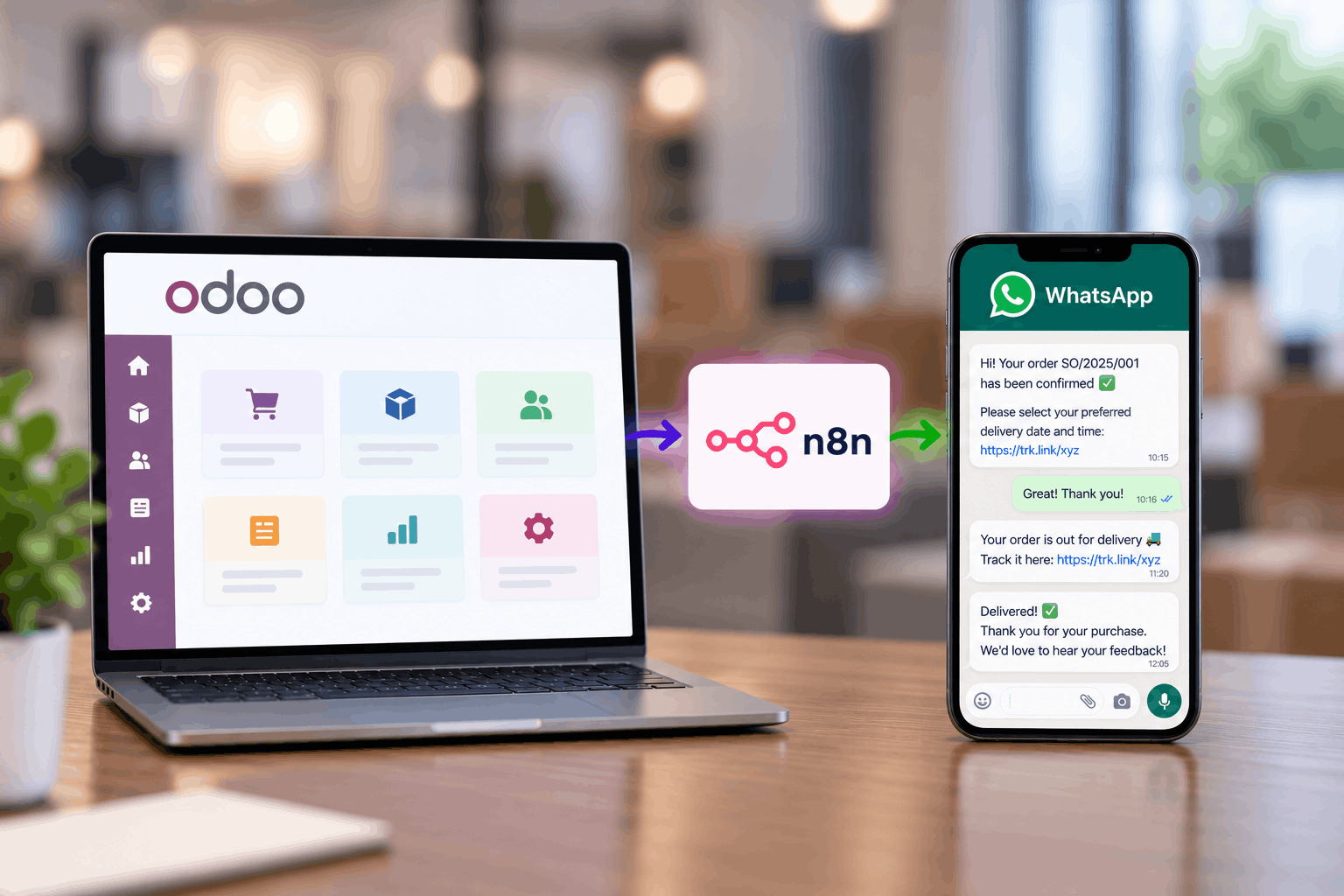
See how Techvoot integrated Odoo ERP and n8n to automate delivery scheduling, driver assignment, proof of delivery and customer support for a Mauritius furniture retailer.
Category:
ERP, Automation
How Odoo ERP Transformed Operations for our UAE-Based Client's Oxy-Hydrogen Equipment Company

A UAE-based oxy-hydrogen equipment company partnered with Techvoot Solutions to implement a customized Odoo ERP platform that unified manufacturing, inventory, procurement, sales, and finance operations. The solution improved operational visibility, streamlined workflows, and enabled faster business decision-making through centralized ERP management.
Category:
ERP
Manufacturing Efficiency Boosted by 35% with Odoo ERP
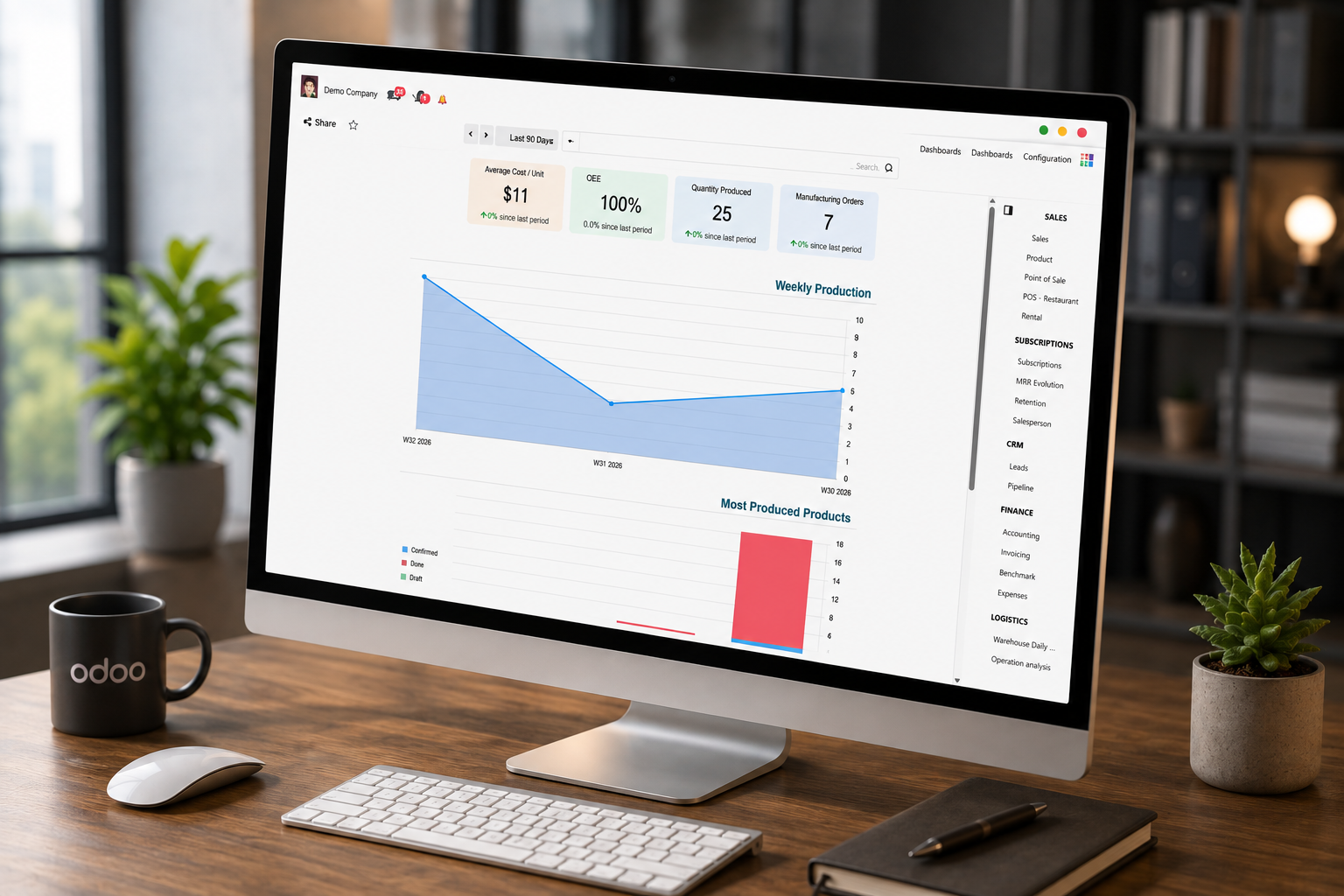
A manufacturing company achieved 35% improved operational efficiency with Techvoot’s Odoo ERP implementation, enabling integrated production, inventory, finance, HR, and logistics management on a single platform.
Category:
ERP
Odoo 14 to Odoo 20 Upgrade Questions
Still unsure about your database?
Can I upgrade Odoo 14 directly to Odoo 20?
Yes, in one project with one go-live. The database still passes through every release in between, Odoo 15, 16, 17, 18, and 19, and each custom module has to absorb the framework changes from all six releases. We run the whole route on a copy first, so production only moves once.
Is Odoo 14 still supported?
No. Odoo 14 was released in October 2020 and its standard support ended in 2023, so it gets no bug fixes or security updates. Odoo 20 is supported until September 2029 (planned).
How long does an Odoo 14 to Odoo 20 upgrade take?
It depends mostly on how many custom modules and integrations you have, and how much data you hold. With six releases to cross, custom code is the biggest part of the work. The free audit gives you a written timeline before any work starts.
What breaks most often when upgrading from Odoo 14 to Odoo 20?
Custom code, not standard data. The biggest changes on this path are attrs and states leaving the views in Odoo 17, record rules giving way to access domains in Odoo 20, analytic accounting being rebuilt in Odoo 16, and tree views becoming list views in Odoo 18.
Should we upgrade Odoo 14 or reimplement on Odoo 20?
Upgrading usually wins when you run mostly standard apps with a few well-documented modules. Rebuilding selected apps usually wins when custom modules rewrite core flows, when Odoo 20 now covers what the custom code did, or when data quality is poor. The audit scores each module and recommends upgrade, rebuild, or remove.
Will we keep our historical data?
Yes. An upgrade keeps your full history, including posted invoices, stock moves, and old documents. If some apps are rebuilt instead, we migrate master data and open balances, and the old database stays available read-only for reference.
Can we upgrade Odoo 14 Community to Odoo 20?
Yes. On Community, the open-source OpenUpgrade project migrates one version at a time, so this path means six consecutive runs. Coverage differs by app and release, so we check each one before planning, and port or rebuild where scripts are missing.
What our clients say
I had the opportunity to work with Techvoot Solutions on a major software project called SchedFAST. Without their support, I'm not sure how far the project would have progressed. Their team is highly detail-oriented and takes the time to ensure everything functions exactly as it should. I would confidently recommend Techvoot Solutions to any company, anywhere in the world, looking for a dependable technology partner.

Tim Sherlock
Owner
I worked with Dhaval for over a year on multiple projects, during which he consistently demonstrated strong technical expertise, particularly in blockchain trading platforms and cryptocurrency solutions. His skills and performance played a significant role in the success of these projects. Dhaval's ability to think beyond conventional approaches, combined with his reliability and punctuality, made him a valuable contributor throughout our collaboration.

Daniel Sachs
CTO
It was a pleasure working with Kevin. He quickly understood the requirements and delivered the work efficiently and on schedule. The code was reviewed by our internal development team and rated highly for its quality. We look forward to working together again in the future.

Marco Landolfo
Consultant
I've had the pleasure of working with Dhaval for quite a long period of time. Dhaval has always been quick to respond and gets things right the first time. Dhaval had a deep understanding of our software and made many suggestions that made it a much better offering.

Jared Strasser
COO
Kevin and his team are a great development and support team. They bring strong technical expertise and guide you through every stage of the project until completion. Their support and commitment make the entire process smooth and reliable. I would highly recommend Kevin and his team.

Azhar Kajee
Founder
They are one of the most highly professional team we ever worked with. They have the required knowledge and they use latest technologies. They not only deliver on time but also provide quality work.

Frederic Ladane
CEO

I highly recommend Kevin as an exceptional software development professional. He effectively manages both web and mobile development, with strong expertise in iOS and Android platforms. Having worked with him for over two years, I've consistently been impressed by his technical skills, reliability, and ability to deliver high-quality results.

Josè Luis
Director
Brilliant work, excellent communication, and consistently timely delivery. The entire experience was smooth and hassle-free. I would definitely work with them again and highly recommend them to anyone looking for reliable IT services.

Paul Twum
CEO
Techvoot Solutions has proven to be a reliable and dependable partner. Their team is responsive, accommodating, and consistently attentive to our requests. They deliver work on time while remaining flexible as our needs evolve. What stands out is their transparency; they're always clear when it comes to invoicing and communication, which builds a strong sense of trust. Overall, Techvoot Solutions is a partner we're confident in and would highly recommend.

Duane Pressley
CTO
Techvoot Solutions delivered the app on time and met all expectations. Their team maintained clear and consistent communication throughout the project, with regular virtual meetings that kept everything aligned and on track.

Shruti Venkat
CEO
I had a great experience working with Kevin and Ravi. They were incredibly supportive throughout the process and consistently delivered excellent service. I would highly recommend them to anyone looking for reliable web development services.

Sherman Wong
Co-Founder of SCS Digital
Techvoot Solutions has been a reliable and consistent partner. Their ability to understand our requirements and act on feedback quickly has made the collaboration smooth and productive. Communication is clear, response times are prompt, and deadlines are always respected. They have a strong grasp of what's needed and consistently deliver solutions that align with our expectations. A dependable team that takes quality seriously in every aspect of their work.

Philip Trümpi
Director
They demonstrated a solid understanding of the scope and were able to deliver the expected outcomes. Techvoot Solutions ensured 99.5% uptime and achieved a 95% satisfaction rate in post-project surveys, delivering the app on time with an agile workflow. The team's responsiveness and structured project management truly stood out.

Artemiy Chervinskyy
Product Manager
Techvoot Solutions demonstrated a deep understanding of our requirements and translated them into a solution that delivered real, measurable impact. Their work reduced manual effort by 60%, streamlined task tracking, and significantly improved overall team productivity. What stood out was their structured approach to project management; highly responsive, detail-oriented, and quick to incorporate feedback. Communication was seamless throughout, making the entire collaboration efficient, transparent, and results-driven.

Gunjan Makwana
Co-Founder
They are highly cooperative and friendly.The team was flexible and responsive to feedback, adhered to timelines, and consistently demonstrated a friendly and collaborative approach.

Sankar Chellam
Director
Their responsiveness, flexibility, and commitment to quality made them stand out. Partnering with Techvoot Solutions led to remarkable improvements in efficiency, productivity, accuracy, cash flow, and engagement. The team managed the project with precision, delivering on time, adapting quickly to changes, and providing consistent support.

Fayad A. M.
CEO & Founder
They are proactive, quick to respond, and always focused on delivering smart, effective solutions. Techvoot Solutions' work has improved my operations, customer experience, and website traffic. The entire team is professional, well-organized, and flexible. They deliver on time, communicate smoothly, and are always open to feedback.

J C
Founder
They are highly professional and efficient, delivering excellent and reliable development work. The team works quickly without compromising on quality and demonstrates strong technical expertise throughout. Their professionalism and consistency make them a dependable partner.

Ozan Askan
CEO
Techvoot Solutions demonstrated a strong understanding of their field and delivered the project on time. The team listened well and understood our needs. The team was easy to work with and communicated via virtual meetings, emails, and messages.

Gaoussou
Co-Founder
They delivered exceptional quality relative to the investment. The team created a design system that aligned seamlessly with our style guidelines and was immediately put to use. They worked efficiently, iterated quickly based on feedback, and maintained clear communication throughout the project. Everything was delivered on time, making the overall experience smooth and reliable.

Thanh Nguyen
Head of R&D
Working with Techvoot Solutions has been an outstanding experience. Their technical expertise, combined with a genuine commitment to client success, sets them apart. The teams professionalism, problem-solving skills, and kindness make them more than just a technology partner, they are a trusted extension of our business.

Massimo Ferracane
CEO
Techvoot Solutions helped us launch three weeks ahead of schedule. Their team consistently delivered high-quality work on time and communicated clearly throughout virtual meetings. They were helpful, professional, and genuinely committed to our projects success.

Chay Moalem
Associate Manager
Techvoot Solutions successfully delivered and launched our website, earning positive feedback. Their team managed the project efficiently, responded quickly to our needs, and patiently handled multiple changes throughout the process.

Jared Sussman
Managing Partner
Techvoot Solutions successfully improved our systems performance and integrated Angular, Node.js, and Elasticsearch components. Their organized project management, responsive communication, and timely delivery made the entire experience highly satisfactory.

Raul Ujog
CEO
Techvoot Solutions improved our platforms performance, stability, and scalability while strengthening its mobile responsiveness, user experience, and backend functionality. Their quick response, respectful communication, and strong technical expertise truly stood out.

Anonyms
Advertising & Marketing