Introduction
The modern software landscape is no longer about simply deciding whether to use off-site servers; it is about how smoothly your systems run once you are there. As systems grow more complex, depending on basic or manual server adjustments leads to significant bottlenecks, uncertain expenses, and unforeseen disruptions.
This is where cloud engineering comes into play. Moving past old-school IT administration, it brings disciplined software engineering principles directly to server and network management, building resilient, scalable, and automated backends.
In this guide, we will break down the meaning of cloud engineering, how it works, the tech suite that powers it, best practices, and how businesses can avoid expensive architectural decisions.
What is Cloud Engineering?
So, what is cloud engineering exactly? At its core, cloud engineering involves applying engineering principles to the design, development, operations, and maintenance of cloud computing systems. It includes all the essentials and infrastructure that operate on platforms such as AWS, Microsoft Azure, or Google Cloud.
Unlike traditional infrastructure management, cloud engineering is not simply about provisioning virtual machines or moving servers from a data center to a cloud provider.
It combines several engineering disciplines:
- Cloud architecture
- Infrastructure as Code
- Networking
- DevOps
- Security engineering
- Containerization
- Automation
- Observability
- Reliability engineering
- Performance optimization
- Cloud cost management
- Disaster recovery
In short, Cloud engineering services let you convert cloud resources into an engineered operating environment where software can evolve safely, scale predictably, and remain economically viable.
Now a question may arise: what is cloud computing engineering? Here, Cloud computing engineering focuses on building computing environments around cloud resources such as compute, storage, databases, networking, containers, serverless platforms, and managed services. So the difference is not about the cloud provider but the engineering thinking behind the environment.
Still Managing Cloud Complexity on Your Own?
Let our team handle the architecture, automation, and security, so your engineers can focus on building instead of firefighting.
Key Components of Cloud Engineering
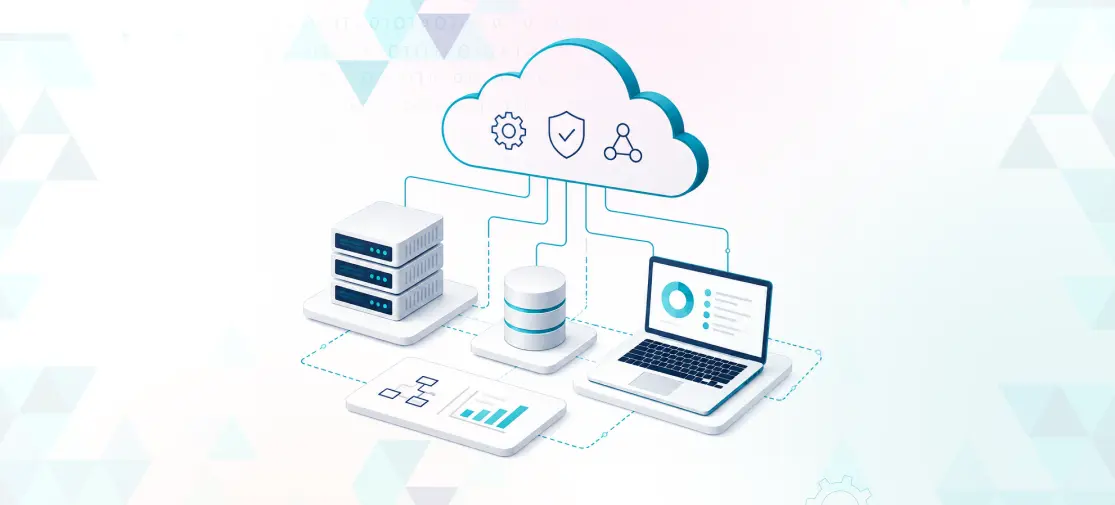
Cloud engineering is not a single technology or job function. It is a connected operating model made up of several engineering layers.

Core Infrastructure
The foundational layer is made up of computing power, storage solutions, networking elements, and database architectures. Cloud engineers create these assets by employing high-availability patterns throughout various availability zones and regions to get rid of single points of failure.
Automation and Operations
Human involvement undermines reliability when scaled up. Cloud engineering operations depend on workflows that are defined programmatically. This includes automated resource allocation, automatic scaling driven by real-time traffic data, and automated disaster recovery failover mechanisms.
Security and Governance
Security is no longer an isolated barrier. From the beginning, identity and access management, network controls, encryption, secrets management, and continuous compliance checks are integrated. Policy-as-code safeguards automatically implement standards, enabling teams to progress rapidly without the need for continuous manual assessment.
Essential Tools & Technologies Empowering Cloud Engineering
Building robust cloud architecture & engineering operations requires a cohesive technology stack tailored to your ecosystem.

|
Cloud Engineering Stack |
|
|
Cloud Platforms |
AWS, Google Cloud, Microsoft Azure |
|
IaC & Config |
Terraform, OpenTofu, AWS CloudFormation, Ansible |
|
Containers |
Docker, Kubernetes (EKS, GKE, AKS) |
|
CI/CD & DevOps |
GitHub Actions, GitLab CI, ArgoCD |
|
Observability |
Prometheus, Grafana, Datadog, OpenTelemetry |
Cloud Platforms and Providers
AWS, Microsoft Azure, and Google Cloud remain the primary platforms. Many organizations also adopt multi-cloud or hybrid patterns and, increasingly, sovereign cloud options for data residency and regulatory needs. Choosing the right mix depends on workload characteristics, existing skills, and compliance requirements.
Infrastructure as Code (IaC) & Configuration
Tools like Terraform, OpenTofu, Pulumi, AWS CloudFormation, and Azure Bicep enable teams to specify the desired state. Configuration management tools keep systems consistent after provisioning. The essential practice is to consider the repository as the sole source of truth and to examine IaC for misconfigurations before deployment in production.
Containers and Orchestration
Containers bundle application code along with its dependencies into a uniform runtime unit. Docker is one of the most commonly known container technologies. Kubernetes manages containerized workloads across clusters. It can automate:
- Service scheduling
- Workload scaling
- Health checks
- Service discovery
- Rolling updates
- Configuration management
- Workload recovery
Containers enhance portability, yet they do not inherently render an application cloud-native. An app requires suitable architecture, security measures, data oversight, monitoring, and operational responsibility.
CI/CD and DevOps Automation
Pipelines created using GitHub Actions, GitLab CI, Jenkins, Argo CD, or Flux automate the processes of testing, security scanning, and deploying application code and infrastructure. GitOps methods maintain the desired state in Git and continuously align the live environment.
Monitoring and Observability
Tools like Datadog, Prometheus, Grafana, and cloud native options like AWS CloudWatch give engineers visibility into how systems are actually performing. Observability goes beyond simple uptime checks. It means being able to trace a slow request through a dozen microservices and pinpoint exactly where the delay happened, before customers file a complaint.
Step-by-Step Cloud Engineering Process
A structured cloud engineering process helps teams move from business requirements to a production-ready platform.

-
Architecture and Design
The cloud engineering services begin with a discovery phase. Engineers design architectural schematics that outline network configurations (VPCs, subnets), security limits, database frameworks, and high-availability strategies in accordance with business SLAs.
-
Infrastructure as Code (IaC) Deployment
After the architecture is finalized, it is converted into code and deployed. This phase turns design diagrams into functioning infrastructure, and since it is coded, the same specifications can be reused to create identical environments for testing or disaster recovery purposes.
-
Security and Policy Integration
Security policies are embedded directly into deployment pipelines. Static code analysis tools scan IaC configurations for misconfigurations such as publicly accessible S3 buckets or open SSH ports, preventing updates from reaching production.
-
Automation and CI/CD Operations
Application code and infrastructure configurations share automated integration pipelines. Changes trigger automated testing suites, security scans, and progressive rollout deployment strategies (such as canary or blue-green deployments) to minimize downtime.
-
Monitoring, Optimization, and Maintenance
Once live, telemetry systems aggregate metrics, logs, and distributed traces. Engineers constantly assess resource utilization to right-size instances, enhance storage levels, and refine auto-scaling limits.
Innovative Cloud Engineering Strategies and Best Practices
To gain a competitive edge, modern organizations are moving beyond standard cloud frameworks and adopting best practices for cloud engineering.
- Design with failure in mind. Consider that any component may fail and build redundancy accordingly, rather than treating outages as rare exceptions.
- Automate repetitive tasks. If a task is performed more than twice, it needs to be documented or formalized.
- Apply least privilege access. Grant individuals and services only the permissions necessary, and nothing else.
- Tag and track cost from day one. Gaining cost visibility becomes significantly more challenging to implement after an environment has expanded.
- Always treat infrastructure as code. Manual adjustments performed outside of the code result in drift that is difficult to trace later.
- Build observability early. Logging and monitoring bolted on after an incident are far less useful than instrumentation planned from the start.
- Review architecture regularly. Cloud services and pricing models change often enough that a design from two years ago may no longer be the most efficient option.
Current Trends in Cloud Engineering
The landscape of cloud engineering services and solutions continues to evolve rapidly, driven by technological innovation.

Artificial Intelligence and Automation
AI is transforming cloud engineering in two ways simultaneously. Cloud platforms provide the foundation for AI workloads, while AI tools are utilized to manage cloud infrastructure, encompassing predictive scaling and automated anomaly detection. Teams must still keep humans in the loop for high-impact decisions and maintain strong governance around agent permissions.
Platform Engineering
Platform engineering assists development teams in utilizing infrastructure via self-service platforms, reusable templates, automated deployments, and uniform workflows. Instead of every developer learning how to configure the cloud from scratch, internal platforms provide a "paved road" for building and deploying applications.
FinOps and Cost-Aware Architecture
The expense of cloud services is increasingly an engineering issue, rather than solely a financial one. Teams are progressively monitoring infrastructure expenses at the workload, application, or transaction level. The 2025 State of FinOps report found that 63% of respondents were already managing AI spending, showing how quickly cost management is becoming important for AI workloads.
Hybrid and Multi-Cloud Solutions
Diverse ventures are operating across public cloud, private infrastructure, SaaS solutions, and edge environments. Consequently, cloud architecture and engineering are increasingly focusing on uniform security, governance, deployment, and observability across multiple environments.
Ready to Build a Cloud Infrastructure That Scales With You?
Hire expert cloud engineers with Techvoot Solutions to design, deploy, and manage infrastructure that grows with your business, without the downtime.
Cloud Engineering: What Lies in the Future?
Cloud engineering will become more platform-oriented and AI-centric. Expect tighter integration between app delivery and infrastructure, increased focus on developer experience through golden paths, and stronger requirements around data residency and sustainability.
The cloud experts will treat reliability, security, and cost as engineering properties of the system rather than separate concerns. They will measure outcomes in business terms (time-to-market, consumer satisfaction, unit economics) rather than treating them as a different issue.
Engineers who can combine deep platform knowledge with product thinking and cost awareness will remain in high demand. Moreover, the tooling will keep changing, but the core goal of cloud engineering designing reliable and secure solutions stays constant.
End Note
At last, the core answer to what is cloud engineering sits at the center of how modern businesses actually operate their technology. It is not just about moving to the cloud; it is about improving everything that runs there. As the market approaches the trillion-dollar milestone and tasks become increasingly intricate, the companies that prioritize robust cloud architecture & engineering will be the ones that expand seamlessly and manage expenses without hindering progress.
Start with clear architecture, document all processes, embed security and cost visibility, automate continuously, and measure the outcomes that matter to the business. The organizations that do this consistently turn the cloud from a utility into a competitive advantage.
FAQ
What does cloud engineering mean?
Cloud engineering is the practice of designing, building, automating, and managing infrastructure and applications on cloud platforms like AWS, Azure, and Google Cloud.
What is the difference between cloud engineering and cloud computing?
Cloud computing refers to the delivery of computing resources over the internet, while cloud engineering is the discipline of designing and managing systems that run on that infrastructure.
Why is Infrastructure as Code important in cloud engineering?
It converts infrastructure into version-controlled code, enabling consistent deployments, faster recovery, reduced human error, and easy auditing of change.
How does cloud engineering help control cloud costs?
It replaces manual hurdles with automated resource rightsizing, auto-scaling based on real traffic, and continuous drift checks. Many teams also integrate automated cost checks into deployment pipelines to block expensive configuration errors before going live.
What are the most popular cloud platforms to learn first?
Amazon Web Services (AWS) leads the market and offers a broad ecosystem, making it the safest starting point. Microsoft Azure is ideal for enterprise and hybrid setups, while Google Cloud Platform (GCP) is widely favored for data engineering and native Kubernetes workloads.
Author Bio

 as
as















.jpg "Anonyms")